
Dental Health Blog | Stonehaven Dentistry
Why Does a Tooth Hurt When You Bite Down?
September 27, 2026 / Dentistry

A tooth can hurt when you bite down because pressure is stressing the tooth, an existing filling or crown, the gums, or the tissues around the root. Possible causes include decay, a crack, a loose or high restoration, gum inflammation, clenching, or infection. The exact cause cannot be identified from the sensation alone. Arrange a dental assessment if the pain persists, returns, worsens, affects chewing, follows an injury, or occurs with swelling, fever, or a visibly broken tooth.
For patients looking for a Dentist on Airport Rd in Mississauga, Stonehaven Dentistry can examine the tooth and explain what the findings mean. Noting whether the pain occurs when you bite, release, chew, or tap the tooth can help make that conversation more useful.
Common Reasons a Tooth Hurts When You Bite
Biting pressure can reveal a problem that is not noticeable when the tooth is at rest. Several different concerns can produce similar discomfort:
- A cavity or weakened tooth structure. Decay can reduce the strength of enamel and dentin. When pressure reaches a weakened area, the tooth may feel sore or sharp.
- A crack or small fracture. Some cracks are difficult to see and may hurt when the tooth flexes during chewing or when pressure is released.
- A loose, high, or worn filling or crown. A restoration may move, wear, or contact the opposing tooth too heavily. The tooth underneath may also have changed.
- Gum inflammation or periodontal concerns. Swollen tissues or changes in the support around a tooth can make chewing uncomfortable.
- Grinding, clenching, or uneven bite pressure. Repeated force can make a tooth and the surrounding tissues feel tender.
- Inflammation or infection around the tooth. A problem inside the tooth or around the root may cause pressure sensitivity and can sometimes occur with spontaneous pain, swelling, or a bad taste.
These are possibilities, not a self-diagnosis. The American Association of Endodontists notes that sharp pain when biting can be associated with decay, a loose filling, or a crack, but a dental examination is needed to determine the source.
Recent dental work can also change how a tooth feels under pressure. A new filling or crown may leave the tooth temporarily tender, or the bite may feel different once the numbness wears off. That does not automatically mean the restoration has failed, but pain that is strong, worsening, or unchanged should be reported to the treating dentist. Mention when the work was completed and whether the tooth feels as though it touches before the others.
Whether one tooth hurts or several teeth feel tender is another useful detail. Pain limited to one spot may direct attention to that tooth or restoration. Discomfort across multiple teeth may make the dentist consider broader bite pressure, grinding, or gum-related causes. The location alone is not diagnostic, but it shapes the questions and clinical checks used during the appointment.
Try not to repeatedly test the tooth with hard food or deliberate clenching. Reproducing the pain at home can place additional stress on a vulnerable area. Instead, note the trigger once, reduce heavy chewing on that side, and share the pattern with the dental team.
Why Bite Pain Shouldn’t Be Ignored
Pain that appears only during chewing can be easy to dismiss because the tooth may feel normal between meals. However, the pressure of biting may be exposing a weak point or irritating tissues that need attention. Avoiding one side of the mouth may reduce the symptom temporarily without addressing its cause.
A small restoration problem may become larger if the tooth continues to carry heavy pressure. A crack may also change over time. Early assessment does not guarantee a simple treatment, but it gives the dentist an opportunity to examine the tooth before symptoms or damage progress.
Pay attention to patterns. Does the tooth hurt with hard foods, soft foods, or any contact? Is the pain sharper when you release your bite? Does cold or heat also trigger it? Has a filling or crown recently been placed? Those details help the dentist distinguish among several possibilities.
What a Dentist May Check During an Exam
The appointment usually begins with questions about where the pain is, when it started, and what triggers it. Because pain can sometimes feel as though it comes from a neighbouring tooth, the dentist may compare several teeth rather than examining only the spot you point to.
The assessment may include:
- Checking whether pain occurs during biting, release, tapping, or pressure.
- Examining fillings, crowns, tooth surfaces, and visible cracks or worn areas.
- Looking at the gums and support around the tooth.
- Checking how the upper and lower teeth meet.
- Testing how the tooth responds to temperature or other clinical checks when appropriate.
- Taking dental X-rays or other images if they are needed to evaluate areas that cannot be seen directly.
Stonehaven Dentistry provides family and general dentistry for routine and concern-based assessments. No single test answers every question; the dentist combines the history, examination, and any necessary images before recommending care.
How Treatment Depends on the Cause
Treatment is matched to the finding. A small area of decay may be managed differently from a cracked tooth, worn crown, inflamed gum, or bite-pressure concern. A recently placed restoration that contacts too heavily may need a different response than an older filling with decay around it.
Restorative dentistry may be discussed when tooth structure or an existing filling or crown needs repair or replacement. If the gums are contributing to discomfort, periodontal dentistry may form part of the plan. A tooth with significant inflammation or infection may require other care. None of these options should be assumed before the exam.
Ask the dentist what they found, which part of the tooth is affected, what options are reasonable, and what may happen if treatment is delayed. Understanding the cause is more useful than choosing a procedure based on symptoms alone.
When to Contact a Dentist
Arrange an appointment when bite pain persists, keeps returning, worsens, or changes how you eat. Contact the office more promptly if the pain follows an injury, the tooth or restoration is visibly broken, your bite suddenly feels different, or the discomfort becomes severe or spontaneous.
Swelling, fever, a bad taste, drainage, facial swelling, or feeling unwell can accompany a dental infection and should not be ignored. The NHS advises seeking urgent dental care for a suspected dental abscess. If swelling makes breathing, swallowing, or speaking difficult, seek emergency medical care immediately.
While waiting for advice, avoid chewing hard foods on the affected tooth, keep the area gently clean, and follow the instructions provided by the dental office. Do not place aspirin directly on the gums or attempt to file, glue, or repair a tooth or restoration yourself.
Frequently Asked Questions About Tooth Pain When Biting Down
Why does my tooth hurt only when I chew?
Chewing places force on teeth, restorations, gums, and the tissues around each root. A weak area, crack, bite issue, loose restoration, decay, gum concern, or inflammation may become noticeable only under pressure. An exam is needed to identify which structure is involved.
Can bite pain mean a cracked tooth?
It can, but bite pain is not specific to cracks. Cavities, loose or high fillings, worn crowns, gum inflammation, clenching, and problems around the root can feel similar. A dentist may use the pain pattern, examination, and images to narrow the cause.
Should I book a dental appointment if the pain comes and goes?
Yes, especially if the pain keeps returning, is becoming stronger, or affects chewing. Intermittent pain does not show that the tooth is healthy. Call more promptly if there is swelling, fever, trauma, a broken tooth, or severe pain.
Talk to Stonehaven Dentistry About Tooth Pain
Bite pain is a symptom with several possible causes. Protecting the tooth from heavy chewing and arranging an assessment is more reliable than trying to identify the problem at home.
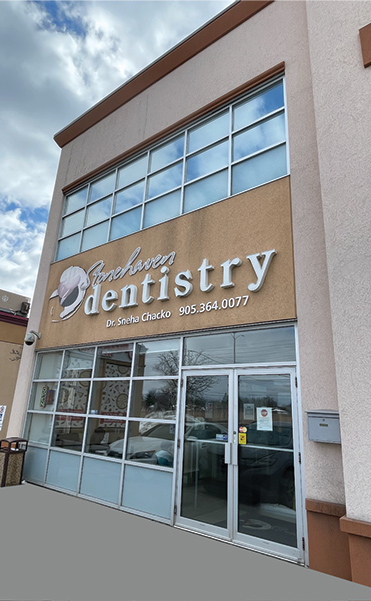
Stonehaven Dentistry is located at 7470 Airport Rd., Unit 2, in Mississauga and serves patients near Airport Road and Malton.
If a tooth hurts when you bite or chew, contact Stonehaven Dentistry to ask about an assessment. The dentist can examine the area before recommending an appropriate next step.