
Dental Health Blog | Stonehaven Dentistry
What Should You Do If a Crown or Filling Breaks?
October 18, 2026 / Emergency Dentistry
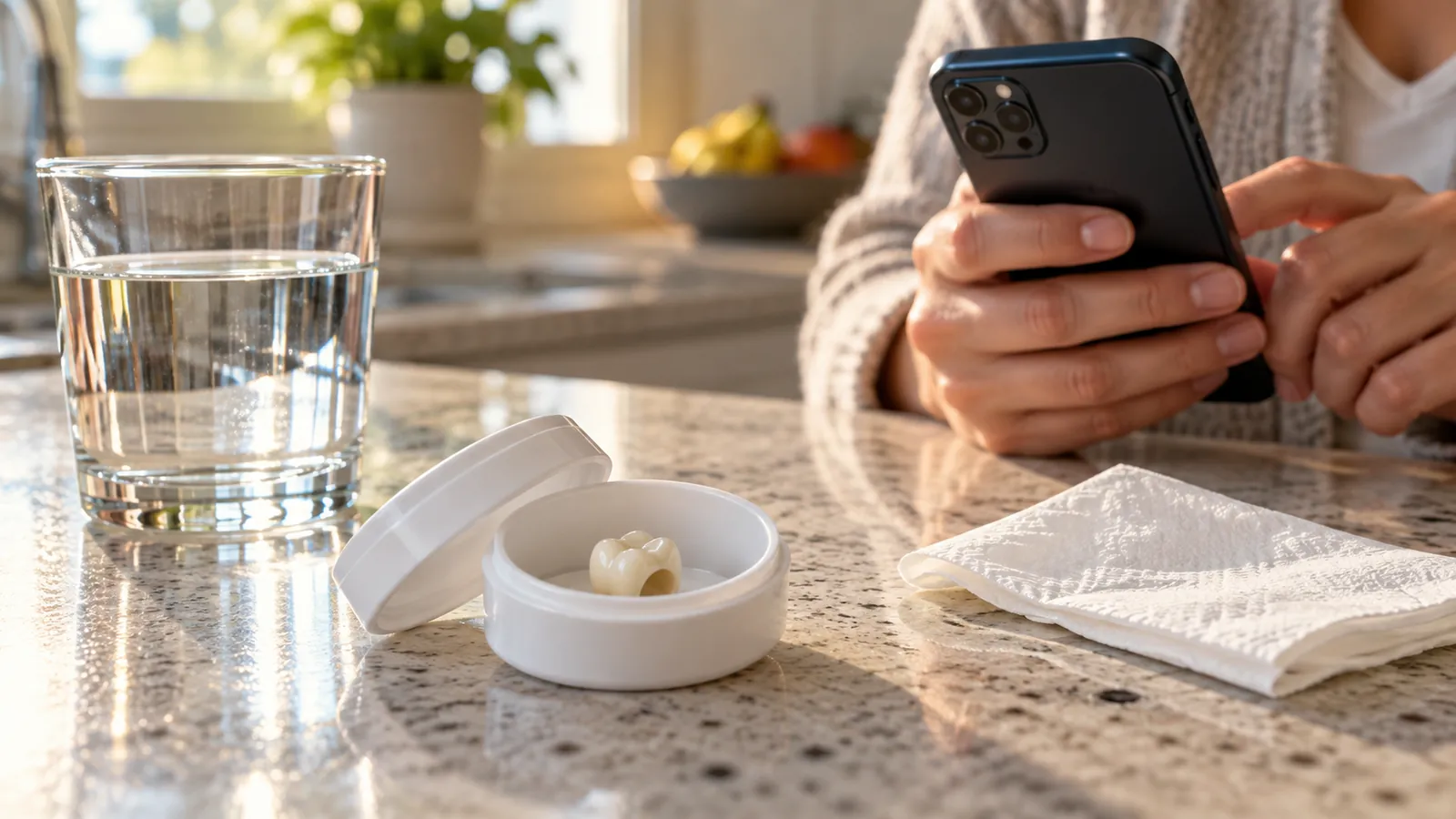
If a crown or filling breaks, loosens or comes out, contact a dentist and describe what happened. Avoid chewing on the affected side, keep any piece you can safely retrieve and do not use household glue. The dental team can advise how quickly you need to be seen based on the damage and your symptoms.
A painless break still needs attention. You cannot tell from the absence of pain whether the remaining tooth is protected or whether more than the restoration has broken.
For people looking for an emergency dentist in Malton, Stonehaven Dentistry at 7470 Airport Road in Mississauga asks patients with dental emergencies to call the office. Explain the situation when you call so the team can discuss the next step and appointment availability.
What May Have Broken: Tooth, Crown or Filling
You may feel a new rough edge while eating, notice a hollow where a filling was or find a crown loose in your mouth. It is not always obvious whether the piece is filling material, part of a crown or natural tooth. You do not have to identify it correctly before seeking help.
A crown covers a prepared tooth, while a filling replaces a damaged portion. When either fails, the remaining tooth needs assessment too. A crown that appears intact after coming off does not prove the tooth beneath it is ready for immediate recementing.
Avoid testing the area by biting down repeatedly or wiggling a loose restoration. If a piece has already come free and can be safely removed from your mouth, place it in a clean container to bring to the appointment. Do not pull on something that remains attached or probe the space with a sharp object.
Tell the dental team if the problem followed a fall, a blow to the face or another injury. Damage from trauma can involve more than the first broken area you notice. If you are unsure whether you lost a crown or part of the tooth, describe what you can see and feel without trying to dismantle anything.
What to Tell the Dental Team When You Call
Start with when the break happened and which part of your mouth is affected. You can say “the back tooth on the lower left” if you do not know its name. Mention whether you have the loose piece and whether the tooth had a temporary or permanent restoration, if you know.
Then describe symptoms clearly:
- Is there pain at rest, on biting or with hot or cold food?
- Is the pain increasing, and is it affecting sleep or eating?
- Is there swelling, bleeding, a bad taste or fever?
- Does a sharp edge irritate your tongue or cheek?
- Can you close your mouth normally, or does the bite feel different?
- Was there a recent injury or recent treatment on that tooth?
The Ontario Dental Association's dental emergency guidance supports contacting a dentist promptly for a broken tooth and asking for advice on care. Do not wait until you have worked out the cause yourself.
Stonehaven Dentistry provides dental care in Malton. Call for an urgent concern rather than relying only on a routine online appointment request. If the office is closed, check its recorded instructions and seek another urgent dental service if you cannot obtain timely advice. Do not assume an appointment has been arranged until it is confirmed.
When Symptoms Need Urgent Medical Attention
Some symptoms require medical help beyond arranging a dental appointment. Call 911 for difficulty breathing or swallowing, or another immediate threat to safety. Severe swelling involving the mouth, face or neck, swelling affecting an eye, uncontrolled bleeding or a serious facial injury needs emergency medical assessment.
The NHS guidance on dental abscesses identifies breathing or swallowing difficulty and substantial mouth swelling among emergency warning signs. A broken restoration alone does not diagnose an abscess, but these symptoms should not be dismissed while you wait for a repair.
For increasing dental pain, localized swelling, fever or feeling unwell, seek urgent advice and explain the full combination of symptoms. If things worsen after your initial call, contact the team again. The advice you received before swelling appeared may no longer fit the situation.
Do not rely on a photograph or an online symptom description to decide that a new swelling is harmless. Likewise, pain settling down does not establish that the underlying problem has resolved. Follow through on the assessment the dental team recommends.
How to Protect the Area While Arranging Care
Until you have advice, avoid chewing directly on the damaged area and choose foods that do not require forceful biting. Avoid hard or sticky foods that could catch on a loose restoration. Keep the area gently clean, without picking inside the gap or scrubbing an exposed surface aggressively.
Do not use household glue to put a crown back on. Do not force it into position or keep a loose crown in your mouth. If you are considering a pharmacy repair product, ask the dentist whether it is appropriate for your situation. A temporary product cannot establish the cause of the break or replace an examination.
Keep a detached crown to bring with you. If the piece may be natural tooth, tell the office and ask how to store it; the advice can differ from storing a crown. Avoid scraping material out of the inside of a crown or modifying it to make it fit.
For pain relief, ask a dentist or pharmacist what is suitable given your health conditions, medicines and allergies. Follow the product directions and do not place a pain-relief tablet directly against the tooth or gum. Do not use leftover antibiotics or someone else's prescription.
Before ending the call, confirm what you should do if symptoms change and who to contact outside office hours. Having those instructions is more useful than repeatedly checking the tooth with your tongue or trying another home repair.
What the Dentist Checks Before Recommending a Repair
The dentist will examine the restoration and the remaining tooth, consider your symptoms and assess the surrounding area. Imaging or other tests may be needed. The aim is to determine what has failed and whether the tooth can support the proposed repair.
Ask whether the problem is confined to the restoration or involves decay, a fracture or another finding in the tooth. A loose crown may sometimes be reusable, but that depends on its condition, fit and the tooth beneath it. A new filling is also not automatically the right answer for every lost filling.
Possible recommendations vary from a limited repair to a replacement restoration or more extensive treatment. Stonehaven Dentistry's article about when a dental crown may be recommended provides background on crowns. After a break, the immediate question is which option suits the tooth as it is now.
If the first visit provides temporary protection or relief, ask what remains to be done. Make sure you understand whether another appointment is needed to complete treatment and what restrictions apply in the meantime. A tooth feeling more comfortable does not necessarily mean the final repair is finished.
Questions to Ask About Repair or Replacement
Once the dentist has explained the findings, ask for the reasoning behind the recommendation. It can help to separate the immediate need from the longer-term plan.
- What broke, and is there damage beneath the restoration?
- Can the existing crown or filling be repaired, or should it be replaced?
- What makes the recommended option suitable for this tooth?
- Is today's treatment temporary or final?
- What should I avoid until treatment is complete?
- How many further visits are expected?
- What does the estimate include, and could additional findings change it?
- What symptoms should prompt another call?
If the same restoration has broken before, bring that up. Ask whether the dentist has identified a reason for the repeated problem and whether the new plan addresses it. You do not need to accept that repeated breakage is simply inevitable.
Tell the team about travel, work or caregiving commitments that may affect follow-up. Those details can help with scheduling, but ask what delay would mean clinically before deciding to postpone the next stage.
Frequently Asked Questions
Yes. Pain alone does not show the condition of the remaining tooth or whether it is adequately protected. Contact the office, describe the break and follow its advice about timing. Do not wait for pain to develop before asking.
Yes. Keep it in a clean container and bring it to the dentist. Its reuse depends on the condition of both crown and tooth. Do not assume that because it looks unbroken, it can safely be put back without assessment.
Do not use household glue or force a crown back into place. Contact a dentist for advice about protecting the area and arranging care. A home repair can make it harder to assess the tooth and does not address why the crown came off.
Not necessarily. The dentist must assess the existing crown, its fit and the tooth underneath. Some situations allow reuse; others need a replacement or a different treatment. The appearance of the detached crown cannot answer that question by itself.
Ask the dental team rather than deciding based on pain alone. Explain when your checkup is scheduled and what has broken. The team can advise whether that timing is appropriate or whether you need an earlier assessment.
Discuss Your Questions With Stonehaven Dentistry
If a crown or filling breaks, contact Stonehaven Dentistry and explain the damage and any symptoms. The office is at 7470 Airport Road, Unit 2, in Mississauga's Malton area. Follow the team's guidance on urgency and bring any detached restoration to the appointment so the dentist can assess the next step.